


In April 2026, the government confirmed that health data belonging to 500,000 UK Biobank participants - including genomic sequences, whole-body scans and medical histories - had been listed for sale. It made headlines, triggered Parliamentary questions and prompted strong words from politicians on both sides.
But the most worrying thing? This was not a cyber-attack.
Technology Minister Ian Murray told MPs directly: "This was a legitimate download by a legitimately accredited organisation." No hackers. No ransomware. No system breached. Three research institutions were given proper access to the data and they allegedly violated the terms under which that access was granted.
For those of us working in data security - particularly those supporting healthcare and associated organisations - that distinction is critical.
Biobank's decision to notify government, suspend access, and implement additional safeguards reflects a maturing approach to incident response in the research and healthcare sectors. Public trust in large‑scale data initiatives depends heavily on visible, decisive action when issues arise.
Healthcare Data Demands a Higher Standard
Health data is among the most sensitive information that exists about a person. Its scientific and commercial value is enormous to both the individual, but also valued dearly by the individuals that the data is from. This makes it a target not just for external attackers, but for those who already have legitimate access to it.
Healthcare organisations routinely share data with researchers, partners and third parties. That sharing is often essential and not concerning in itself. But it creates a risk that many organisations are not yet equipped to manage effectively. The question is not whether to share sensitive health data - it is whether you have the controls to know what happens to it once you do.
The Gap That DLP Is Designed to Close
UK Biobank have now introduced several controls such as daily export monitoring and strict limits on file sizes that can be removed from its platform, which are essentially DLP principles applied reactively. A well-implemented DLP programme, with appropriate policies in place, could have flagged or blocked the bulk export of this data quickly and effectively.
This is the gap we see most often in healthcare and life sciences: governance frameworks that focus heavily on who gets access, and far less on what leaves. Access controls and signed contracts are important but their effectiveness hinges on meaningful oversight of downstream data handling.
It is also worth noting that de-identification does not close this gap on its own. Legal experts have already observed that datasets as detailed as UK Biobank's - combining genomic data, lifestyle records and biological measurements at scale - can carry real re identification risk, and may still be treated as personal data under UK GDPR.
The Questions Worth Asking Now
The UK Biobank incident is a high profile version of a risk that exists across the healthcare sector every day. Whether you are a hospital trust, research institution, pharmaceutical company or health tech business, the questions are the same:
· Who has access to your sensitive data, and under what conditions?
· Are you monitoring data movement — not just access events?
· What would you see, and how quickly, if an authorised user misused your data?
If you would like to talk through how your organisation is managing health data risk - whether that is insider risk, third-party controls, or understanding whether your DLP programme is fit for purpose – we can help!
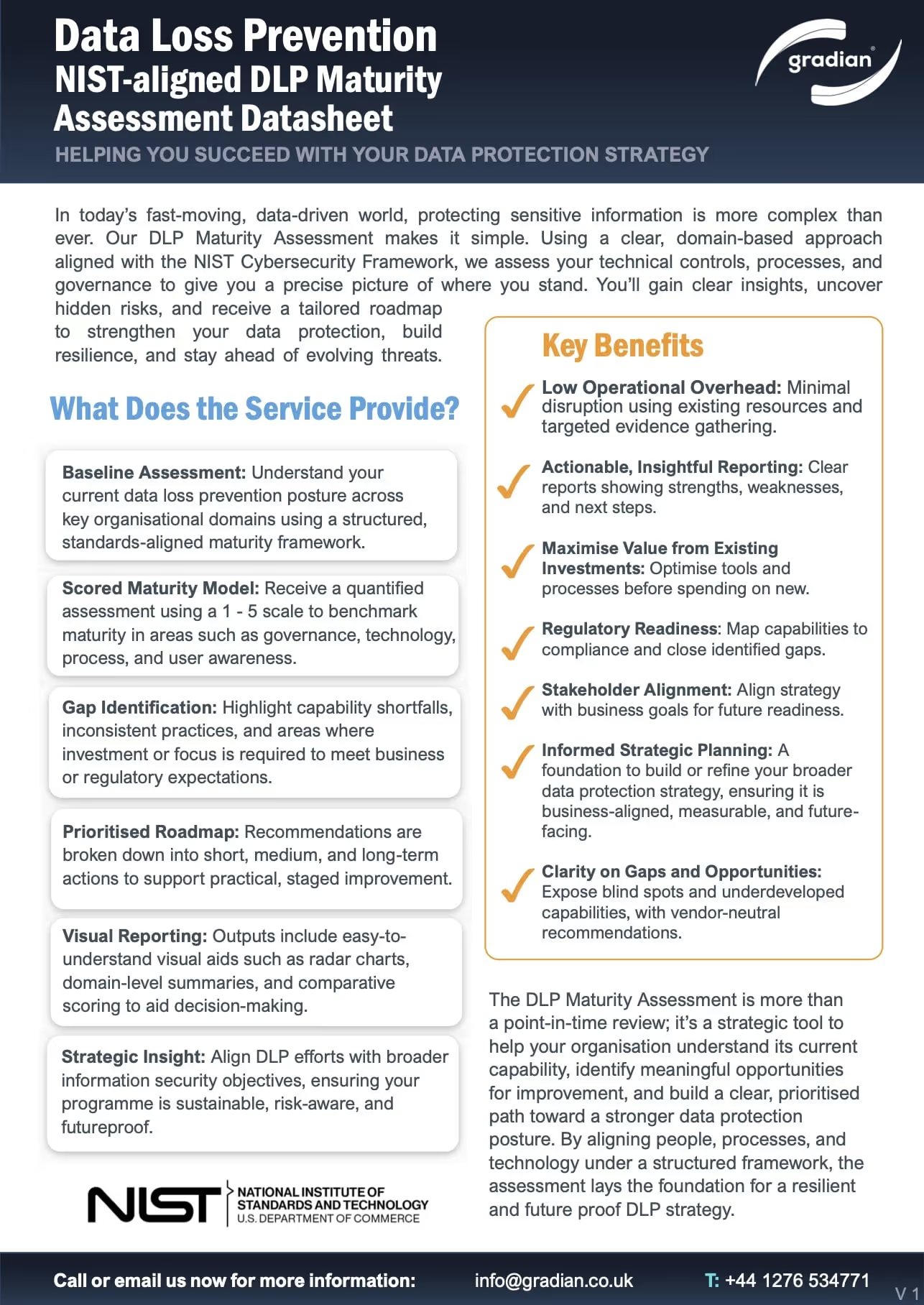
At Gradian, we offer a free DLP workshop for any organisation who need help or advice with their DLP. This workshop aims to help you understand where to begin, develop a roadmap tailored to your organisation’s specific requirements and provide insights into available market options. We’ll also discuss what constitutes “good”for your organisation and offer advice on improving your current roadmap. All this is delivered by highly accredited, world-class DLP professionals. Get in touch with us here.






.avif)